
A Plea for Play
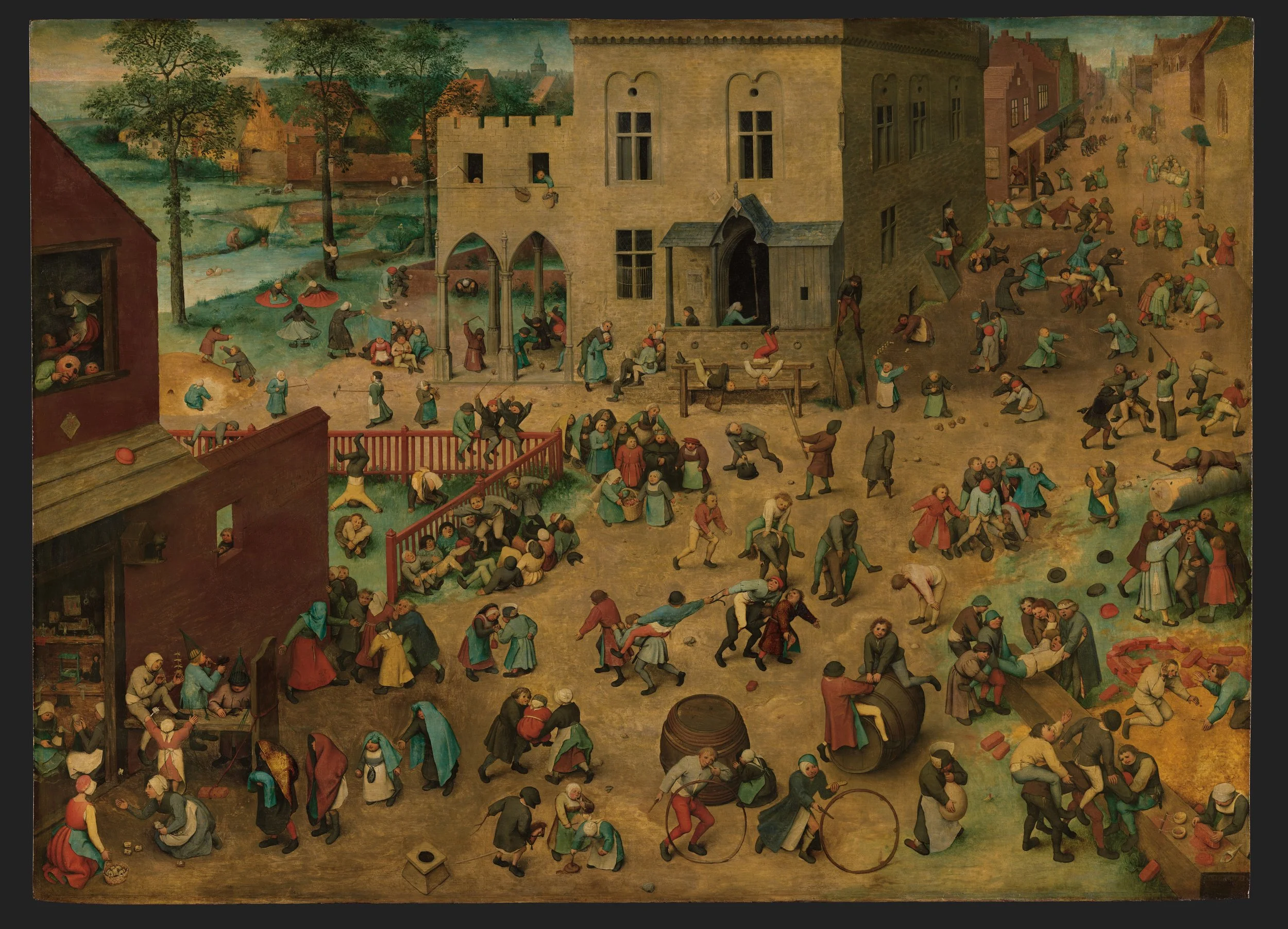
When Breugel painted, “Children’s Games” in 1560 he was probably driven by the need for political comment rather than the documentation of childhood. There’s no doubt though that the way children were perceived and understood was changing profoundly during the Renaissance period and play became a recognised part of childhood. What we see here is more than 200 children playing almost 90 games, many of which have survived in recognisable form to this day.
As well as a philosophical perspective on childhood, we now understand much more about the science of play. It has a pivotal role in many aspects of child development. The enjoyment we experience in play also causes our brains to release dopamine, a neurotransmitter that’s a crucial part of how we motivate ourselves. Healthy levels of dopamine are also linked to better memory, creativity and mental flexibility. So while children are enjoying playing they’re also busy building up crucial skills for living well.
For a whole range of reasons, children’s early play is under siege. It has been compromised by both wealth and austerity. In less affluent households, stressed parenting and lack of access to natural and outdoor environments, can lead to relative play deprivation. Children brought up in wealthier households may be over-scheduled and over-supervised. Those experiencing play deprivation, we now know, suffer abnormalities in neurological development.
Play has certainly enjoyed less popularity with policymakers in the last 15 years, with an ever-increasing emphasis on formalising learning early, in the pursuit of higher standards. Recent research shows that these policies may have been counter-productive- effectively contributing to the mental health problems we are now seeing in children and young people.
The Institute of Fiscal Studies recently published data on the long-term impact of Sure Start Centres- a New Labour legacy. It found that children who lived within a short distance (2.5 kilometres) of a Sure Start centre for their first five years performed 0.8 grades better in their GCSE’s and by age 16, the probability of having an Education, Health and Care Plan had decreased by 9%.
Sure Start centres- initially established in areas of deprivation, later spread nationwide but the fundamental idea was to support the development of early relationships between parents and children, promoting safe, welcoming spaces where children could express themselves freely, including through play, and feel a sense of belonging. As many as 1000 of these centres have been closed since 2010.
If we are serious about tackling the issue of mental health and well-being in children and young people, of course, we need to make sure that therapy is available in a rapid, safe and cost-effective manner, but we also need to listen to the evidence and invest in childhood and families from the start of their journeys.